How Gautama the Buddha Created The Human Super Model
No single human being, living, has full knowledge and perception of the horrendous ugliness of human life. The reason is not far to find. Each ordinary person moves in a very limited space, with limited experiences, limited knowledge and limited perception. There are a few amongst them, who by various efforts acquire some knowledge of the many aspects of human and cosmic life, but here too, such knowledge is limited by extent and by field.
In this situation, ordinary human beings have no full knowledge or understanding of the limitless range of sufferings of human beings in a panorama that extends to the four corners of the world.
The poverty, incurable decease, physical deformities, mental derangement, exploitation of man by man, abuse, effects of natural calamities of famine, floods, earthquakes, winds and heat waves, wars and malnutrition make human life a sea of miserable sorrows. The inherent qualities of man, conditioned by his own need for the satisfaction of his own senses, have produced a being given to major immoral acts, as well as lesser faults that harm himself and others. 44 such harmful qualities of man that creates strife and conflict have been identified.
Throughout the history of the world, men have pondered on how to escape from this cycle of sorrow and the direction of these efforts ended mostly in salvation for single individuals through their chosen path. The method adopted was to seek salvation, through the guidance of a Teacher, to attain certain levels of holiness with the culmination in death with, “Union with God”.
Siddhartha Gautama trod on this same path for long and attained certain levels of knowledge, concentration and supra – mundane abilities. But he went beyond the others of his time, and broke through the final barrier to attain what he called Enlightenment – full knowledge of reality as it is, Yatha Bhutha Gnana Darshana.
Gautama the Buddha, on his Enlightenment, realized that all average human beings have deranged minds. He perceived with this insight knowledge that this deranged condition is caused by three main factors namely, ignorance, desire and delusion. These three words cover the basis on which the entire range of ordinary activities connected to thoughts, words and action are effected by all average human beings. The Buddha concluded that human beings by birth are fettered to a life of sorrow arising from the three factors, ignorance, desire and delusion.
He decided to outline the path by which any human could overcome this entrenched sorrow leading to a state, serene, tranquil and peaceful. He taught that the shortest possible and the most effective way is to renounce the house – hold life and follow a discipline of precepts that would raise the human being to a higher plane both physically and mentally, culminating in Enlightenment.
The Buddha’s Enlightenment was not really the turning point in his career. It was the foundation on which, he took the revolutionary step of evolving a process of discipline, whereby any enterprising person could achieve the same enlightenment that he had attained – something no other Teacher had ever ventured to bestow on others.
Training of Bhikkus
He enlisted persons to follow his courses in discipline and morality consisting of restrained living, practicing Dana, Seela and Bhavana, which invariably altered the inward and outward conduct of these recruits to a level of respectability and nobility among others, even at the initial stages. He called these recruits, the Arya Sangha.
These renouncers of house-hold life were required to follow, with course of time, rules of discipline to transform themselves from a deranged, undisciplined position to that of a highly disciplined individuals striving towards the ultimate ideal of becoming a higher being – Uttari Manussa.
As time passed by the numbers admitted to Sangha swelled, the Buddha had to widen the code of conduct and disciplinary rules to ensure orderliness among the Bhikkus.
The Disciplinary Rules of a Bhikku provides a meticulous method of training of a human being to a culture that re-fashions him into a different being altogether, physically and mentally.
There are 220 Disciplinary Rules for Bhikkus relating to the manner in, walking, sitting, sleeping, eating, cleaning of teeth, washing the mouth and body, bathing, personal hygiene, spitting, passing waste, cutting of hair and beard, begging for alms, conduct in the presence of women, teachers and rulers. This etiquette defined the manner of every movement, every word spoken, and even every thought generated which elevated the Bhikku to a higher cultural level, in sharp contrast to the undisciplined, coarse conduct of common people.
This system of training completely transformed the individuals from coarse, uncultured, rough and undifferentiated status into a clan of highly cultured and disciplined fraternity that evoked respect and honour from beholders.
The disciplinary rules also envisaged penalties to be imposed by the elder Bhikkus on those who defaulted in the observance of these precepts.
Human Training and objectives
In modern times, training processes of human beings to reach desired goals and objectives, are numerous. There are military academies like Sandhurst in Great Britain, Where recruits are given a complete military training in all aspects of warfare and they pass out as accomplished warriors. In athletics and sports, there are training schools that produce competent and excellent sportsmen. There are finishing schools for women, where posture, deportment, poise, hospitality, house – keeping, and other feminine accomplishments are taught and training provided, which will equip a woman for efficient home – making and social intercourse inculcating culture and etiquette.
The Goal of Bhikku Training
The Buddha’s training programme for Bhikkus, raised the cultural level of all who joined the Sangha, with guidance on how to conduct themselves in a refined and dignified manner that would elevate them in the eyes of the beholder to nobility. The uniformity and sameness of the behavior of the Sanga made them a special tribe.
In conjunction with this disciplined and restrained physical conduct, the doctrine of Dhamma infused the Bhikkus with moral refinement in thought and speech. The precepts that would carry the Bhikkus progressively towards Enlightenment completed the training system of Bhikkus who in the process underwent a complete transformation in personality.
Training of Non – Bhikkus
The Buddha perceived that all human beings will never become Bhikkus and the majority will continue to pursue lives which appease and gratify their sensual needs, forever tethering them to the status of the mentally deranged, puthujjana.
Having compassion towards these self centered , uninitiated people, he formulated a procedure to advance the status of these ordinary folk towards the ultimate goal of sanity or Nirodha, in a gradual process, which was less austere and less demanding than the umbrella of conduct for Bhikkus. The Buddha exhorted these laymen to cultivate virtues under the umbrella of Dana, Seela and Bhavana, outlining moral precepts that would benefit both the individual and society, by and large. The effectual result of this project was the reduction of the level of violence and conflict that prevailed in society arising out of the clashes of individual self – interests. The Buddha advocated the subordination of individual or self interest to common interests. History records that this project of self restraint produced harmony and peace in a society that was ridden with violence and conflict.
The Bhikku was the via media through which this message of the Buddha was carried to the masses.
Doctrine had a Dual Purpose
Thus the Buddha’s doctrine achieved a dual purpose of emancipation of the individual from sorrow and the reduction of conflicts and violence in society by motivating ordinary people to follow an ethical and moral path as a means towards their own graduated salvation. He explained to the multitude the basis of his recommendations outlining the cosmic laws or Niyama Dharma, which determined human and cosmic life.
It has to be conceded that the precepts he propounded were ideals which ordinary human beings could not live upto most of the time. Nevertheless, to these beings, the ideal was something to be pursued and the efforts to reach the ideal resulted in a more orderliness in human life reflecting a reduction in social tensions, conflict and violence, that the Buddha explained was due to greed, ignorance and delusion.
From Ugliness to Beauty
Man in any period of time, in any geographical area is basically an untamed animal acting in a myriad complex ways to satisfy his six senses. A more cultured few in any social group is only a fringe and the great mass bear the stamp of ugliness and irrationality in conduct. These crude and unbecoming behaviors result in conflictual situations which make life miserable for ordinary people. Life becomes a struggle, not only against nature but also against other men.
The Buddha was successful to a large extent to train hundreds and thousands of men and women to tread the path that he outlined for Bhikkus and the lesser upasakas of his time.
The impact of the fraternity of Bhikku Sanga on the society that prevailed was considerable. The Sanga attracted all classes of people from socially superior like noblemen, kings, princes and rich businessmen to the lowest in the social hierarchy like the Sudras, the labourer class. All these different types were regimented by the Code of Discipline, the Vinaya , producing in the process, one homogeneous tribe of Savaka Sanga, that looked alike and acted alike. The Sanga became a broad based social movement for the moral transformation of society. They received the patronage of kings and noblemen of the day, adding a political dimension to the mass acceptability of the doctrine the Bhikkus professed. Thus, their exemplary conduct and their non- injurious living, commanded great respect from the community.
Beautiful Friends
The Buddha called the Sanga, Kalyana Mitta, beautiful friends. They were beautiful to behold, and beautiful to associate. They lived ennobling lives, turning the wheel of Dhamma instructing and guiding ordinary people to follow the path, expecting the happiness and welfare of the many – folk.
Treading the path, man ascended from ugliness to beauty and commenced dwelling in the abodes of the Gods, Brahma Viharana, effusing Metta, Karuna, Muditha and Upekka – Loving kindness, compassion, sympathetic joy and equanimity.
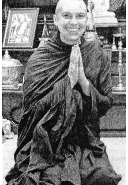
Bhikku is the Human Super Model of the Buddha’s making. Bhikkus showed the way to beautiful living. They were the beautiful friends of mankind.
TAIL PIECE : The present day Bhikkus of Sri Lanka are mostly a grotesque caricature of a Bhikku that Lord Buddha had moulded. They neither conform to the Rules of conduct nor follow the precepts of Dhamma, which are the reasons for their degeneration. The Buddha predicted this situation.


Leave a Reply